
IOM, Japan Supports Sri Lanka’s First Airport E-gates, Advancing Secure Border and Health-Resilient Travel
2026/1/28
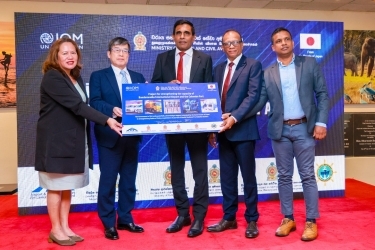
Colombo, Sri Lanka – Sri Lanka is strengthening its in border systems and improving passenger convenience as it takes a major step towards becoming a modern aviation hub. The Ministry of Ports and Civil Aviation, in partnership with the Embassy of Japan and the International Organization for Migration (IOM) launched the country’s first Automated Border Control (ABC) e–gate at Bandaranaike International Airport (BIA) on 28 January 2026. The initiative is part of a Japan-funded project and implemented by IOM to strengthen capacity of border control for responding to infectious diseases in Southwest Asia.
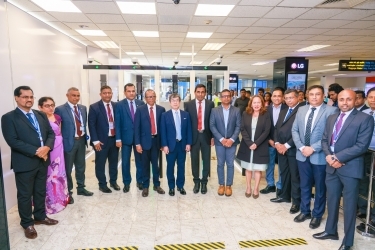
The ceremony was attended by senior Government representatives, Embassy of Japan, and key border agencies, including the Ministry of Ports and Civil Aviation, the Ministry of Public Security, the Department of Immigration and Emigration, Airport and Aviation Services (AASL), Sri Lanka Customs, and Sri Lanka Ports Authority (SLPA), alongside H.E. Akio Isomata, Ambassador of Japan to Sri Lanka, and Hon. Anura Karunathilaka, Minister of Ports and Civil Aviation, Hon. K. M. Ananda Wijepala, Minister of Public Security and Parliamentary Affairs and Kristin Parco, IOM Chief of Mission in Sri Lanka and the Maldives.
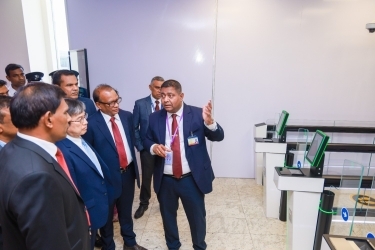
Reflecting on this achievement, Hon. Anura Karunathilaka, Minister of Ports and Civil Aviation, remarked, “Sri Lanka remains committed to advancing its aviation and port sectors through modernization, guided by global standards in safety, health and sustainability. These strategic efforts reinforce our role as a secure and efficient gateway for international travel and trade.”
With the total value of USD 8.4 million, this project reflects Japan’s commitment to regional pandemic preparedness, health security and safe mobility, advancing efforts to strengthen emergency measures and build resilience. It also aligns with Sri Lanka’s national priorities for digital transformation, public health security, and compliance with International Health Regulations (IHR).
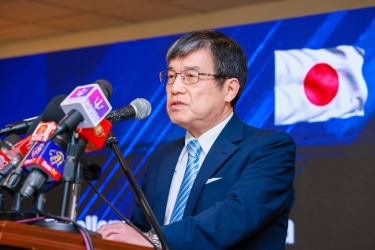
Ambassador Isomata, referring to the significance of the project in a broader perspective, said, “This project goes beyond the immediate benefits of strengthening infectious-disease preparedness and operations at Sri Lanka’s key points of entry. The recent severe cyclone has underscored the importance of preparedness and resilience at borders, not only in response to pandemics, but also in the context of disasters, when the movement of people and goods can increase public-health risks. Tourism is a critically important sector, as the country strives for the recovery and sustainable development of its economy. Alongside with this IOM-implemented project, Japan’s yen-loan assistance for the expansion of the BIA is in progress with the construction of a new terminal as its main component. Upon completion of this expansion project by the Government of Japan, we will be seeing, in a few years, an entirely transformed main entryway to Sri Lanka, which will become a source of great pride for the people of Sri Lanka.”
He further mentioned, “In parallel, Japan has been actively supporting Sri Lanka’s response to the recent cyclone through emergency assistance, as well as through ongoing assessments to identify recovery and disaster-risk-reduction needs. Looking ahead, Japan remains committed to working with Sri Lanka to strengthen resilience across critical infrastructure, including road infrastructure, water management and disaster preparedness, as part of our long-term partnership for sustainable development.”
In addition, as part of the project, and with support from the Government of Japan, IOM officially handed over a range of advanced border management and health-security equipment to Sri Lanka. This includes cutting-edge screening systems, biometric access controls, and upgraded facilities to enhance border security and improve the passenger experience.
Kristin Parco, IOM Chief of Mission in Sri Lanka and the Maldives, highlighted the broader impact and stated, “IOM is proud to lead the technical innovation behind this milestone, built on the strength of collaboration with the Government of Japan and the Government of Sri Lanka. Together, we have deployed the key ports of entry with advanced technology that ensures security, efficiency and health resilience thereby setting a new standard for border management.”
Passengers will soon experience faster immigration clearance through new e-gates, reducing waiting times and improving overall airport efficiency. This milestone marks progress in Sri Lanka’s digital transformation and its role as a safe, connected and future-ready mobility gateway in South Asia.