
Japan and FAO Partner with Sri Lanka to Restore Inland Fisheries in Ditwah Affected Eastern Province
2026/5/29
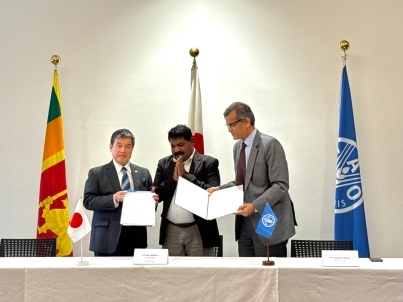
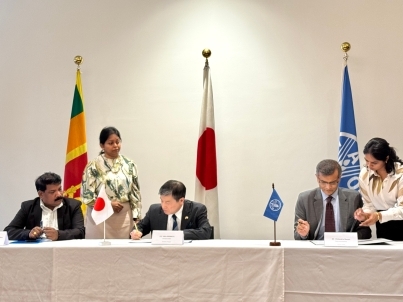
May 2026, Colombo - The Government of Japan and the Food and Agriculture Organization of the United Nations (FAO), in partnership with the Government of Sri Lanka, have launched a joint initiative to restore inland fisheries livelihoods and strengthen the resilience of cyclone-affected fishing communities in Sri Lanka’s Eastern Province.
The initiative was formally signed by H.E. Akio Isomata Ambassador of Japan and Mr. Vimlendra Sharan, FAO Representative for Sri Lanka and the Maldives, in the presence of Hon. Ramalingam Chandrasekar, Minister of Fisheries, Aquatic and Ocean Resources at the Embassy of Japan in Colombo.
Funded by the Government of Japan with a total budget of USD 1.33 million, the project will be implemented from June 2026 to November 2027 across Ampara, Batticaloa and Trincomalee districts, supporting fishers and Culture-Based Fisheries Organizations (CBFOs) affected by Cyclone Ditwah.
Cyclone Ditwah caused extensive flooding across Sri Lanka, severely impacting inland fisheries systems in the Eastern Province. Floodwaters and emergency reservoir releases resulted in the large-scale loss of stocked fish fingerlings and table-size fish, destruction of barrier nets and fisheries infrastructure, and the disruption of breeding and stocking cycles. The resulting depletion of fish stocks significantly reduced fish production and incomes for thousands of inland fishing families already facing heightened economic vulnerability.
The project aims to rapidly restore inland fisheries production and livelihoods through large-scale reservoir restocking, provision of floating rearing cages, procurement of essential fish breeding hormones, and installation of barrier nets to prevent future fish losses during floods and reservoir overflows.
The intervention will directly support 1,504 fishers across 30 reservoirs in the Eastern Province, while indirectly benefiting more than 6,000 household members through improved food security, nutrition and income stability. The project is also expected to significantly increase fish production in the targeted reservoirs through the stocking of 5.48 million fish fingerlings and the establishment of community-managed cage systems capable of producing approximately 16 million fingerlings annually.
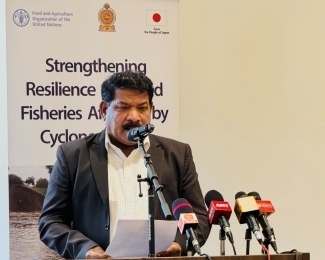
Speaking on the initiative, Hon. Ramalingam Chandrasekar emphasized the importance of restoring inland fisheries livelihoods in cyclone-affected communities. “Cyclone Ditwah dealt a severe blow to inland fishing communities in the Eastern Province, many of whom depend entirely on reservoir fisheries for their livelihoods and food security. This partnership with the Government of Japan and FAO will help rebuild fish stocks, restore incomes, and strengthen the resilience of vulnerable fishing families against future climate-related shocks.”
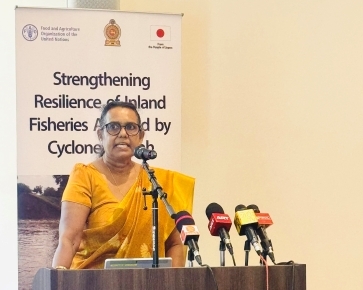
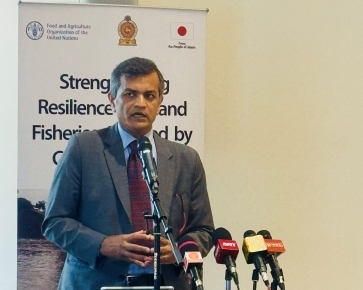
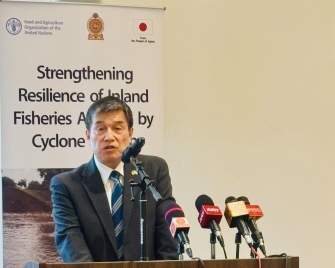
H.E. Akio Isomata stated, “The new project launched today, while it aims to restore fisheries resources lost due to the cyclone, also constitutes a strategic investment in the future, namely, the construction of resilient fishery communities capable of withstanding future climate-related shocks. The proactive measures introduced under this project, including the establishment of floating rearing cages and the installation of barrier nets, represent innovative and indispensable technical approaches to safeguarding fisheries resources and minimizing potential damage caused by future weather-related events. Also, at a time when marine fisheries face mounting operational costs due to high fuel consumption, sustaining and enhancing inland fisheries production, which requires significantly less fuel while securing an important domestic source of protein, is of strategic importance to Sri Lanka’s national food security. The Government and the people of Japan will continue to stand alongside the people of Sri Lanka, as its steadfast friend and partner, in support of Sri Lanka's journey toward sustainable and resilient development.”
Mr. Vimlendra Sharan highlighted the project’s focus on restoring productive capacity while laying the foundation for more resilient fisheries systems. “This project goes beyond immediate recovery assistance by helping communities rebuild sustainable and climate-resilient inland fisheries systems. Through reservoir restocking, improved fingerling production, protective infrastructure, and community capacity building, FAO is supporting affected fishers to restore livelihoods, improve food security, and strengthen resilience to future climate shocks.”
The project will be implemented by FAO in close collaboration with the Ministry of Fisheries, Aquatic and Ocean Resources, the National Aquaculture Development Authority of Sri Lanka (NAQDA), and local Culture-Based Fisheries Organizations. Activities will include technical training on fingerling rearing, cage management, barrier net maintenance, and sustainable fisheries governance to ensure long-term sustainability and community ownership.